RTS & Transport
RTS Link Fares, Operating Hours & Immigration: What We Know So Far
Quick answer
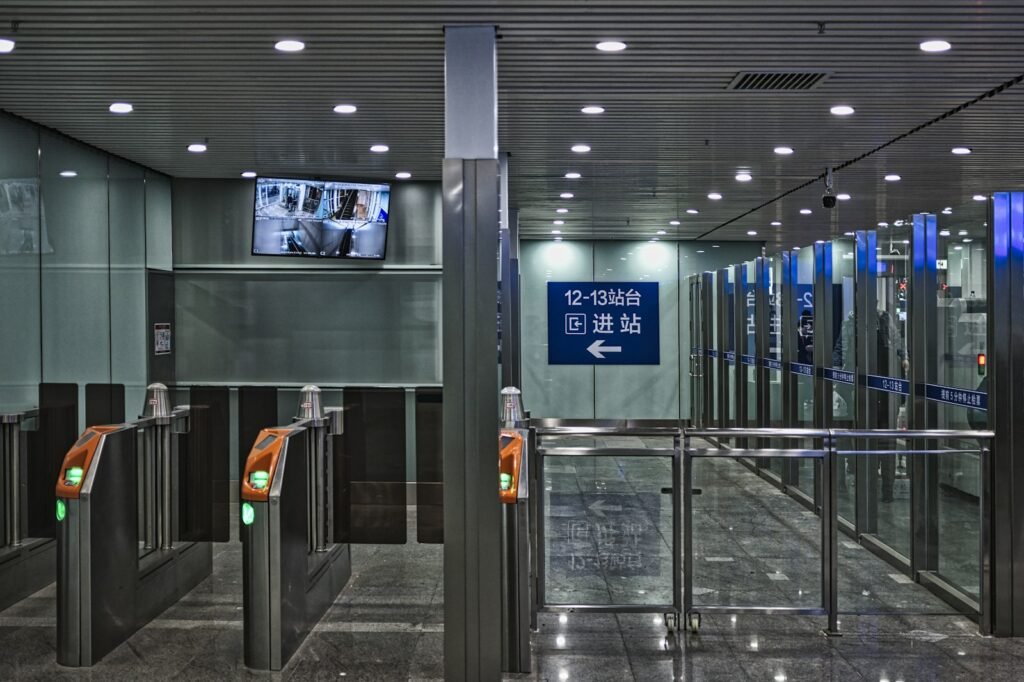
As of early November 2026, official RTS Link fares had not been announced; Malaysia's Transport Minister expects them by end-2026, set commercially by the operator. Service is targeted for February 2027, and passengers clear both countries' immigration once, at the departure station, using passports or QR codes at e-gates.
In this guide
- Key takeaways
- What is the RTS Link fare?
- What will the RTS Link operating hours be?
- When does the RTS Link open?
- How will immigration work on the RTS Link?
- What does this mean for a daily commuter? A worked example
- How does Twin Tower Residence fit into the RTS picture?
- Who benefits most once the RTS runs?
- What should you watch for in the coming months?
- Common RTS Link misconceptions
- Conclusion
- Sources
Everyone living near the Bukit Chagar station wants to know the same three things about the RTS Link fare, the operating hours and how immigration will work. This guide pulls together what has actually been announced as of early November 2026, separates confirmed facts from what is still pending, and explains what it means for residents of Twin Tower Residence, the completed freehold serviced residence right beside the JB terminus.
Key takeaways
- Official RTS Link fares had not been announced as of early November 2026; the Transport Minister said they should be announced by the end of 2026, before service starts.
- Any fare figures circulating online are unofficial; only the operator’s joint announcement with both governments will set the actual fare.
- Passenger service is now expected to start in February 2027, subject to independent safety certification and final approvals.
- Immigration is co-located: you clear both Malaysian and Singapore checks at your departure station, then simply walk out on arrival.
- Bukit Chagar’s ICQ complex has 100 e-gate lanes that accept passports or QR codes.
What is the RTS Link fare?
The short answer: nobody outside the operator and the two governments knows yet. The fare will be set commercially by the operator, RTS Operations Pte Ltd (RTSO), a joint venture between Prasarana Malaysia and SMRT Corporation. Singapore’s Ministry of Transport told Parliament in April 2026 that fares will be determined commercially by the operator and announced in due course.
On 20 October 2026, Malaysia’s Transport Minister Anthony Loke said fares are expected to be announced by the end of 2026, so the public has time to understand them before trains start running. He also stressed that the announcement will be made jointly, because the RTS Link is a bilateral project.
Why there is no official figure yet
Because pricing follows commercial principles, the fare depends on the operator’s own costs and demand forecasts rather than a government-set tariff. Figures quoted online before the official announcement are unofficial, so wait for the joint announcement before fixing a commuting budget.
How does that compare with what commuters pay today?
The RTS Link replaces KTM’s Shuttle Tebrau, which as reported in February 2026 charged RM5 from JB to Woodlands and S$5 in the other direction. The RTS will be faster and carry far more people, so a higher fare than the old shuttle was always likely. The comparison that matters for most commuters is total door-to-door time, not just the ticket price.
| Item | Status (early Nov 2026) | What we know |
|---|---|---|
| Fare per trip | Not announced | Set commercially by the operator; official fares expected by end-2026 |
| Start of passenger service | Targeted | February 2027, subject to safety certification and approvals |
| Operating hours | Not officially confirmed | Planning figures reported as about 6am to midnight |
| Train frequency | Not officially confirmed | Planning figures reported as about 3.6 minutes at peak, 6 minutes off-peak |
| Journey time | Confirmed design | About 5 minutes, Bukit Chagar to Woodlands North (~4 km) |
| Capacity | Confirmed design | Up to 10,000 passengers per hour per direction |
| Immigration | Confirmed design | Co-located; clear both countries once, at departure |
What will the RTS Link operating hours be?
Official first-train and last-train times had not been published at the time of writing. Planning information reported by the rail enthusiast site Land Transport Guru points to an operating day of roughly 6am to midnight, with trains about every 3.6 minutes at peak and about every 6 minutes off-peak. These are useful for planning but are not a confirmed timetable, so check the operator’s announcement before you build a daily routine around a specific train.
The trains themselves are confirmed: eight driverless four-car trains, each able to carry more than 600 passengers, giving a peak capacity of up to 10,000 passengers per hour in each direction. The ride between the two stations takes about five minutes.
When does the RTS Link open?
On 2 October 2026, Singapore’s Land Transport Authority and Malaysia’s Ministry of Transport issued a joint release saying passenger service is now expected to begin in February 2027. Infrastructure on both sides is substantially complete; RTSO expects to finish final system tests and trial runs by 31 December 2026, then needs certification from an independent safety assessor, which both governments must accept. Mr Loke later described the extra month as a buffer and said no further delay was expected. For the full background on the route and stations, see our RTS Link guide.
How will immigration work on the RTS Link?
This is the part that changes daily life the most. The RTS Link uses co-located customs, immigration and quarantine (CIQ) facilities at both Bukit Chagar and Woodlands North. You clear Malaysian departure and Singapore arrival checks before you board in JB. When the train reaches Woodlands North, you walk straight out — no second queue. The return trip works the same way in reverse.
Step by step at Bukit Chagar
- Walk into the Bukit Chagar ICQ complex beside the station.
- Pass through security screening — the complex has 10 body-check lanes, 18 baggage scanners and dedicated lanes for passengers without luggage.
- Clear immigration at one of 100 e-gate lanes, using your passport or a QR code.
- Board the train and ride about five minutes to Woodlands North.
- Exit into Singapore; Woodlands North connects to the Thomson-East Coast MRT Line.
The RTS Link project director said in August 2026 that commuters should be able to clear immigration “in a matter of seconds” with the e-gates. Mr Loke confirmed that regular passports will be accepted and that QR codes are an optional digital route. Malaysia’s Border Control and Protection Agency (AKPS) plans to station 640 officers and personnel at the complex.
What does this mean for a daily commuter? A worked example
Because fares are not yet official, here is a simple way to plan. Assume a commuter making two one-way trips a day, 22 working days a month.
- Trips per month: 2 × 22 = 44 trips
- Monthly fare cost = 44 × the official one-way fare (once announced)
- If fares differ by direction: 22 × the JB-to-Woodlands fare + 22 × the Woodlands-to-JB fare
Plug in the official fare as soon as it is published — the real figure will also depend on the official fare table, any stored-value or concession products, and whether fares differ by direction. Compare this with your current cost of buses, fuel, tolls and parking, plus the time you spend in Causeway queues. Our commute comparison and commuter cost breakdown walk through these trade-offs in detail.
How does Twin Tower Residence fit into the RTS picture?
Twin Tower Residence (Pangsapuri Duo), developed by Parasky Projects Sdn Bhd of SKS Group, sits beside the Bukit Chagar RTS station on Jalan Tengku Azizah. It is freehold, completed in 2023, with 458 units across 41 storeys. For someone who will cross the border daily, being next to the departure point means the walk to the gates is short, and the co-located clearance means there is no second queue at the other end.
Several local improvements are also coming around the station:
- A direct link to KTM: the government announced in August 2026 an RM60 million pedestrian bridge between Bukit Chagar station and KTM’s JB station, expected to take about 12 months to build.
- Public-transport priority: Johor plans to reserve Jalan Jim Quee, beside the Bangunan Sultan Iskandar CIQ complex, for buses, taxis and officials from 2027, with e-hailing moved to Jalan Tun Razak.
- Pedestrian overhead bridges: several are planned around Bukit Chagar station, most by end-2026 and the rest in 2027.
Read our walking guide from Twin Tower to Bukit Chagar RTS station, or see the map on our location section.
Who benefits most once the RTS runs?
The Singapore commuter
Predictable journey times are worth more than a cheap ticket when you have to be at work by 9am. A studio or 2-bedroom unit close to the station keeps the daily routine simple. If you plan to buy as a foreigner, purchases are subject to Johor state consent and minimum-price rules; many Twin Tower units are below RM1m, so check eligibility first.
The investor
Tenants who work in Singapore tend to value walkability to the crossing above everything else. Units that are already completed and close to the station can be rented out immediately when service starts, rather than waiting for construction.
Families and retirees
Easy weekend trips to Singapore for family visits, medical appointments or shopping become far simpler when the station is next door and clearance happens once.
What should you watch for in the coming months?
- The joint fare announcement, expected by end-2026.
- The confirmed opening date and the official first and last train times.
- Any stored-value card, concession or payment-method details.
- Updated e-gate eligibility rules and QR clearance instructions.
- Progress on the KTM link bridge and pedestrian bridges around Bukit Chagar.
We update our site as each announcement lands. If you want to line up a unit near the station before service starts, WhatsApp Darren for the latest available units and floor plans, or browse current listings.
Common RTS Link misconceptions
- “The fare is already fixed.” No. Figures circulating online are unofficial. Official fares are expected to be announced jointly by end-2026.
- “You queue again at Woodlands.” No. Clearance is co-located; you clear both countries once at departure.
- “Only QR codes work.” No. Regular passports are accepted; QR is an optional digital route.
- “The Causeway jam disappears.” Unlikely. The RTS can move up to 10,000 passengers per hour per direction, while about 350,000 people used the Causeway daily (as reported in August 2026). Buses, cars and walking will continue — which is why living close to the station gives you the most choice.
Conclusion
As of early November 2026, the RTS Link’s fare and hours were still pending, but the essentials are settled: a five-minute ride, one-stop co-located clearance at departure, 100 e-gates at Bukit Chagar and a February 2027 target start. Wait for the joint fare announcement before locking in numbers. For anyone who will cross daily, living right beside the station at Twin Tower Residence remains one of the simplest ways to make the most of it.
Sources
- LTA & MOT Malaysia joint release: RTS Link service targeted for February 2027 (2 Oct 2026)
- Malay Mail: RTS Link fares expected by year end (20 Oct 2026)
- The Star: RTS delayed to Feb 2027 to iron out the kinks (8 Oct 2026)
- Singapore MOT: Parliamentary reply on RTS Link fares (7 Apr 2026)
- The Star: Commuters can clear immigration in seconds (17 Aug 2026)
- Malay Mail: Passports accepted, QR offered as digital option (18 Aug 2026)
- Singapore MOT: Unveiling of the first RTS Link train (30 Jun 2025)
- Land Transport Guru: RTS Link overview
- The Star: RM60mil bridge to be built (19 Aug 2026)
- The Star: JB road will close to private vehicles (19 Sep 2026)
Frequently asked questions
Will the RTS Link fare be the same in both directions?
That has not been confirmed. The old KTM Shuttle Tebrau charged RM5 from JB and S$5 from Woodlands, so direction-based pricing has precedent, but the RTS operator has not published its fare structure. Fares will be set commercially by RTS Operations Pte Ltd and announced jointly by Malaysia and Singapore, expected by the end of 2026.
Do I need to clear immigration again when I arrive in Singapore by RTS?
No. The RTS Link uses co-located customs, immigration and quarantine facilities at both stations. Travelling from JB, you complete Malaysian departure and Singapore arrival checks at Bukit Chagar before boarding, then exit freely at Woodlands North. The return journey works the same way in reverse, so there is only one clearance per trip.
Can I still use my passport at the RTS Link e-gates, or must I use a QR code?
Malaysia's Transport Minister confirmed in August 2026 that regular passports will be accepted at the Bukit Chagar ICQ complex, and that QR codes are an optional digital method. The complex has 100 e-gate lanes. Eligibility for e-gates can depend on nationality, so check the latest immigration guidance for your passport before travelling.
Why was the RTS Link opening moved to February 2027?
In a joint release on 2 October 2026, both governments said the operator needs time to finish final system tests and trial runs by 31 December 2026 and then obtain independent safety certification and final regulatory approvals. Malaysia's Transport Minister described the extra month as a buffer to avoid technical problems at launch.
How long does the RTS Link train journey take?
About five minutes between Bukit Chagar in Johor Bahru and Woodlands North in Singapore, a distance of roughly 4 km. Your total trip also includes walking to the station, security screening and e-gate clearance, so residents who live right beside Bukit Chagar station keep that extra time to a minimum.