RTS & Transport
JB to Singapore Daily Commute: RTS vs Bus vs Car vs Walking the Causeway
Quick answer
From 2027, the RTS Link is expected to be the most reliable JB–Singapore commute: a 5-minute ride with one-stop immigration, though fares are not yet announced. Buses are the cheapest at a few Singapore dollars a trip. Driving gets costlier as Singapore's weekday VEP rises to S$50 a day, and walking across the Causeway is banned.
In this guide
- Key takeaways
- Why does the commute choice matter so much?
- How do the options compare at a glance?
- Option 1: the RTS Link
- Option 2: the KTM Shuttle Tebrau
- Option 3: cross-border buses
- Option 4: driving
- Option 5: motorcycle
- Can you walk across the Causeway?
- Worked examples: monthly commuting costs
- A day in the life: three commutes compared
- Which option suits you?
- Where should you live for the easiest commute?
- Conclusion
- Sources
Choosing how to handle a daily JB Singapore commute is one of the biggest decisions for anyone living in Johor Bahru and working across the border. From 2027 there will be five realistic ways to cross: the new RTS Link, the KTM Shuttle Tebrau (for a transition period), cross-border buses, driving a car and riding a motorcycle. Walking across the Causeway is not one of them. This guide compares each option on time, cost, reliability and comfort, with worked monthly budgets, so you can pick the routine that suits you, and the home that makes it easiest.
Key takeaways
- RTS Link (expected February 2027): about 5 minutes Bukit Chagar–Woodlands North, both countries’ immigration cleared before boarding; fares not yet announced.
- Shuttle Tebrau: about 5 minutes, RM5 from JB / S$5 from Woodlands; ends six months after the RTS opens.
- Buses (CW1, CW2, 160, 170, 170X, 950 and others): cheap and frequent, but you clear immigration at two checkpoints and share the road with traffic.
- Driving into Singapore gets more expensive from 1 January 2027: VEP rises to S$50 a day on weekdays for Malaysian cars, with free VEP days removed.
- Walking the Causeway is banned on the Malaysian side, with fines of RM300–2,000.
Why does the commute choice matter so much?
The Causeway is one of the world’s busiest land crossings, with commonly cited estimates of roughly 250,000–400,000 people a day through Singapore’s land checkpoints and far more on peak days. A commute that takes 30 minutes on a quiet morning can take two or three times longer on a bad one. Over 44 crossings a month (22 workdays × 2), small differences in reliability add up to many hours, and real money.
How do the options compare at a glance?
| Option | Crossing time | Cost per one-way trip | Clearance | Reliability |
|---|---|---|---|---|
| RTS Link (from Feb 2027, expected) | About 5 min ride | Not yet announced | Both countries at departure station | High: own track and own CIQ |
| KTM Shuttle Tebrau | About 5 min ride | RM5 (JB) / S$5 (Woodlands) | Malaysia at JB Sentral, Singapore at Woodlands | Good, but limited seats and trips |
| Cross-border bus | Varies with traffic | e.g. CW1 up to S$2.60, CW2 up to S$4.80 from Singapore | Get off at each checkpoint | Variable at peak times |
| Car | Varies with traffic | Fuel, tolls, parking, plus S$50/day VEP on weekdays from 2027 (Malaysian cars) | Car lanes at both checkpoints | Variable; flexible door to door |
| Motorcycle | Often faster than cars | Fuel, plus S$7/day VEP on weekdays from 2027 | Motorcycle lanes, QR options | Weather and safety exposure |
| Walking the Causeway | Not permitted | Fines RM300–2,000 | — | Not an option |
Figures from official and published sources as of Sept–Nov 2026; fares and fees change, so check before you commit.
Option 1: the RTS Link
The RTS Link is a 4 km rail shuttle between Bukit Chagar in JB and Woodlands North in Singapore. Passenger service is expected to start in February 2027, after a joint Malaysia–Singapore statement on 2 October 2026. The ride takes about five minutes, and each station has co-located customs, immigration and quarantine for both countries, so you clear everything before boarding and walk straight out on arrival. Woodlands North is the northern end of Singapore’s Thomson–East Coast Line (TEL).
Strengths
- Not affected by Causeway road traffic.
- One clearance stop instead of two.
- Direct connection to the TEL into central Singapore.
- Capacity of up to 10,000 passengers per hour per direction.
What to watch
Fares and operating hours had not been announced as of early November 2026. Reference sources mention 6am to midnight, but treat that as provisional until the operator confirms. Your total time also depends on how far you live from Bukit Chagar station, which is why homes beside it, such as Twin Tower Residence, are in focus. See Twin Tower to Bukit Chagar RTS station.
Option 2: the KTM Shuttle Tebrau
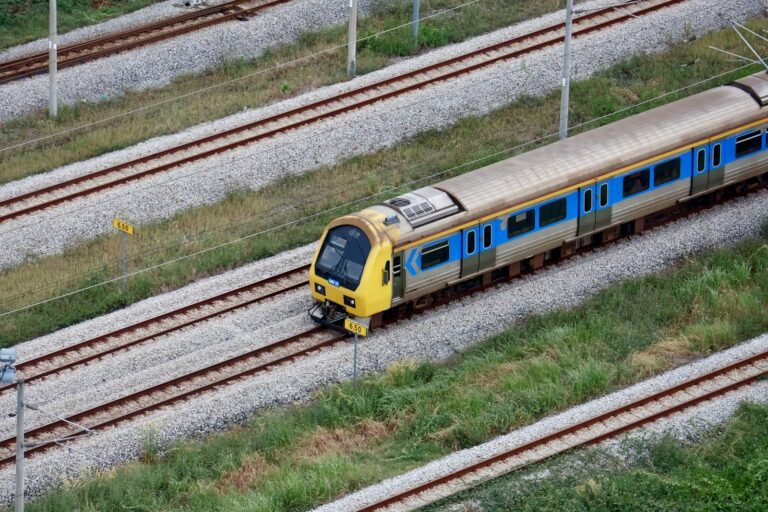
The Shuttle Tebrau has run between JB Sentral and Woodlands Train Checkpoint since 2015. It takes about five minutes and costs RM5 from JB or S$5 from Woodlands. You clear Malaysian immigration at JB Sentral and Singapore immigration on arrival at Woodlands. Seats are limited, so regular commuters book well ahead. Under the bilateral agreement it will stop six months after the RTS starts, so treat it as a bridge until mid-2027.
Option 3: cross-border buses
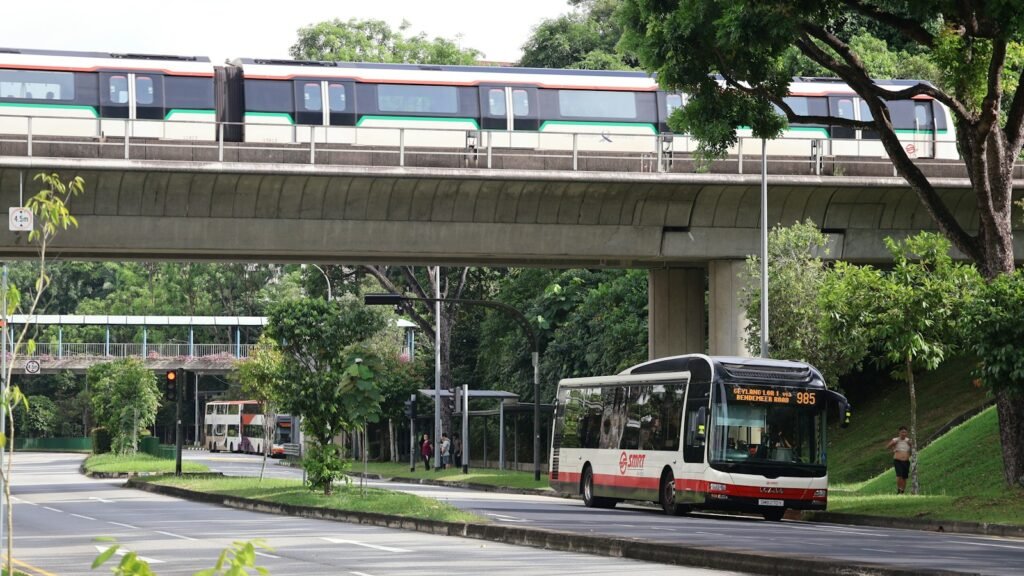
Buses are the workhorse of the Causeway. Common routes from the JB CIQ (Bangunan Sultan Iskandar) and JB Sentral include Causeway Link CW1 to Kranji MRT and CW2 to Queen Street, and SBS Transit/SMRT routes 160, 170, 170X and 950. A Wise guide checked in September 2026 listed CW1 at up to S$2.60 and CW2 at up to S$4.80 from Singapore; SBS and SMRT routes charge distance-based fares.
The trade-off is that you get off at both checkpoints to clear immigration and then reboard, and the bus shares the bridge with all other road traffic. Causeway Link went cashless on cross-border services from 1 October 2026. Malaysia’s MyNIISe QR (with priority counters for users from 4:30am to 8am at BSI since August 2026) and Singapore’s MyICA QR code can speed up clearance. See our Twin Tower to JB CIQ walking guide.
Option 4: driving
Driving gives door-to-door flexibility, which matters if your workplace is far from public transport. But costs are rising. Singapore’s LTA announced that from 1 January 2027 the Vehicle Entry Permit fee for foreign-registered cars rises from S$35 to S$50 a day, charged on all days except weekends and Singapore public holidays, and the 10 free VEP days a year and free weekday VEP hours are removed. Vehicles without an on-board unit will also pay a flat S$10 ERP charge per ERP operational day.
In the other direction, Singapore-registered cars entering Malaysia need a Malaysian VEP with an RFID tag; since 15 November 2025 vehicles without one cannot leave Malaysia until fines are paid.
Option 5: motorcycle
Motorcycles are popular with Malaysian workers because the dedicated lanes often move faster than car queues. From 1 January 2027 the Singapore VEP for foreign motorcycles rises from S$4 to S$7 a day on weekdays, and those without an on-board unit pay a flat S$3 ERP charge per ERP operational day. The downsides are exposure to rain and heat, and road safety on a crowded bridge.
Can you walk across the Causeway?
No. Malaysian authorities reaffirmed in April 2026 that walking along the Johor Causeway is not allowed, with fines of RM300 to RM2,000. You can walk to the JB checkpoint, but you must ride across.
Worked examples: monthly commuting costs
Assume 22 workdays a month, so 44 one-way crossings.
| Scenario | Calculation | Cross-border cost per month |
|---|---|---|
| Bus, CW1 both ways at S$2.60 | 44 × S$2.60 | S$114.40 |
| Shuttle Tebrau: RM5 out, S$5 back | 22 × RM5 + 22 × S$5 | RM110 + S$110 |
| Car VEP only, from 2027 (weekdays) | 22 × S$50 | S$1,100 before ERP, parking, fuel, tolls |
| Motorcycle VEP only, from 2027 (weekdays) | 22 × S$7 | S$154 before ERP, fuel |
| RTS Link | 44 × fare (to be announced) | Calculate once fares are published |
These are cross-border legs only. Add your MRT or bus fares inside Singapore, and any cost of getting from home to the checkpoint. That last item is where location matters: from Twin Tower Residence, JB CIQ, JB Sentral and the RTS station are all within walking distance, so the home-to-border leg costs nothing.
A day in the life: three commutes compared
Imagine Mei, who lives in central JB and works near Orchard in Singapore.
By car: she joins the checkpoint queue, clears immigration in the car lanes at both ends, then pays ERP and parking in the city. From 2027, the weekday VEP alone is about S$1,100 a month. The upside is flexibility after work.
By bus: she walks to the JB CIQ, takes a cross-border bus, gets off to clear immigration at both checkpoints and continues into town. It is the cheapest option, but arrival time depends on traffic on the bridge.
By RTS: she walks to Bukit Chagar, clears both countries once, rides five minutes to Woodlands North and takes the TEL straight to Orchard. The fare is still to be announced, but the journey is the most predictable and there is no parking to think about.
If Mei lives close to the RTS station, the most sensible mix from 2027 is likely to be RTS on weekdays and the car only for occasional weekend trips.
Which option suits you?
If you work along the TEL or in central Singapore
The RTS plus TEL is likely to be the most predictable choice from 2027. Live as close to Bukit Chagar as you can.
If you work in Woodlands, Kranji or the north
Buses such as CW1, 170X or 950 remain cheap and direct; the RTS to Woodlands North is also a strong option.
If you work somewhere hard to reach by public transport
Driving or riding may still make sense, but budget for the higher 2027 VEP fees.
If you are flexible with hours
Avoid the peaks. Living within walking distance of the checkpoint lets you wait at home and leave when the queue eases.
Where should you live for the easiest commute?
The best commute starts with the right address. Twin Tower Residence, a freehold serviced residence completed in 2023, sits beside Bukit Chagar RTS station and within walking distance of JB CIQ and JB Sentral, giving residents every rail and bus option without a car. Portal asking rents seen in October 2026 were roughly RM2,300–3,000 a month for studios and RM3,000–3,500 for 2-bedroom units (indicative asking figures). For a full budget, read renting at Twin Tower as a Singapore commuter, or WhatsApp Darren for the latest available units and floor plans. You can also browse current listings.
Conclusion
From 2027, the RTS Link is set to become the most reliable way across for rail commuters, while buses stay the budget choice and driving becomes noticeably more expensive. Whatever mix you choose, living within walking distance of Bukit Chagar, JB Sentral and the CIQ gives you the most options and the least time lost before you even reach the border.
Sources
- LTA – RTS Link service targeted for Feb 2027 (2 Oct 2026)
- LTA – Updates for foreign-registered vehicles entering Singapore (6 Feb 2026)
- Bernama – Tebrau Shuttle fares and end date (8 Oct 2026)
- Wise – Bus from Singapore to JB: routes, fares and timings (Sept 2026)
- Malay Mail – Can you walk across the Causeway? (19 Apr 2026)
- Malay Mail – No VEP, no exit (1 Nov 2025)
- Bernama – MyNIISe priority counters at BSI (11 Aug 2026)
- Wikipedia – Johor Bahru–Singapore Rapid Transit System
- Wikipedia – Johor–Singapore Causeway
Frequently asked questions
What is the cheapest way to commute from JB to Singapore?
Cross-border buses are usually the cheapest. A Wise guide checked in September 2026 listed Causeway Link CW1 at up to S$2.60 and CW2 at up to S$4.80 from Singapore, with SBS and SMRT routes charging distance-based fares. The Shuttle Tebrau costs RM5 from JB. RTS Link fares had not been announced as of November 2026.
How much will it cost to drive a Malaysian car into Singapore from 2027?
From 1 January 2027, Singapore's VEP for foreign-registered cars rises to S$50 a day, charged on all days except weekends and Singapore public holidays, and the 10 free VEP days are removed. Cars without an on-board unit also pay a flat S$10 ERP charge per ERP operational day. Fuel, tolls and parking are extra.
Will the RTS Link replace the Causeway buses?
Not entirely. The RTS Link only runs between Bukit Chagar and Woodlands North, so buses will still serve passengers heading to other destinations such as Kranji, Queen Street or Jurong. The KTM Shuttle Tebrau is the service that will end, six months after the RTS opens. Many commuters will likely mix RTS and buses depending on their destination.
Is it faster to ride a motorcycle across the Causeway?
Motorcycle lanes often move faster than car queues, which is why many Malaysian workers use them. However, riders are exposed to weather and road safety risks, and from 2027 the Singapore weekday VEP for foreign motorcycles rises to S$7 a day. The RTS Link offers a weather-proof alternative for those living near Bukit Chagar.
Where should I live in JB for the easiest Singapore commute?
As close as possible to Bukit Chagar RTS station, JB Sentral and the JB CIQ, so you can use the RTS, Shuttle Tebrau or buses without needing a car to reach the border. Twin Tower Residence, a freehold serviced residence completed in 2023, sits beside the RTS station with the CIQ and JB Sentral within walking distance.